
Have you been to the doctor’s office and wonder why it matters whether or not your grandmother had high blood pressure or diabetes? According to WebMD “These details about your family health are vital to doctors because some diseases run in families.”
The online Mayo Clinic states that Doctors use genetic medical information to:
- Assess your risk of certain diseases
- Recommend changes in diet or other lifestyle habits to reduce the risk of disease.
- Recommend medications or treatments to reduce the risk of disease
- Determine which diagnostic tests to order
- Determine the type and frequency of screening tests
- Identify a condition that might not otherwise be considered
- Assess your risk of passing conditions on to your children.
Illnesses that may have a genetic component include: Cancer, Heart disease, Diabetes, High blood pressure, High cholesterol and Stroke.
Medical history is vitally important for your doctor to know what you are at risk for and often family medical history is challenging to find. But do not give up hope, here are some resources that might be helpful. And be sure to start recording your medial history now for future generations!
Sources of Medical History
You might find these at Home
- Church Bulletins – sometimes announcements about illnesses are included in the requests for prayer.
- Correspondence – someone may have written about an illness, or asked how someone was doing who was sick.
- Diary/Journal – often people record information about their illnesses or the condition of others.
- Family Bibles – people often recorded information about illnesses and deaths in their Bible.
- Family Tradition – maybe someone recalls that uncle Fred had TB?
- Life Insurance Records – this would be a gold mine to know what was included in application, or payout of life insurance.
- Photos – sometimes photos may reveal visible disabilities or pictures of a funeral/burial.
- Funeral Cards – these were very popular in the early 1900’s

Example: Funeral Card for Our Dear Father – Jacob Oertli
05 Jun 1839 – 20 Jul 1912
Records you may need to write for
- Burial Records – each cemetery recorded the purchase of burial plots and each person buried there.
- Civil Records – could there be legal papers filed in the county related to your relatives death? Was the death an accident?
Online Records
- Cemetery Records – often cemeteries have excellent records of people buried there. FindAGrave.Com is a start! I found this amazing tombstone on Find A Grave. It lead to information about how small-pox affected our family at one time.
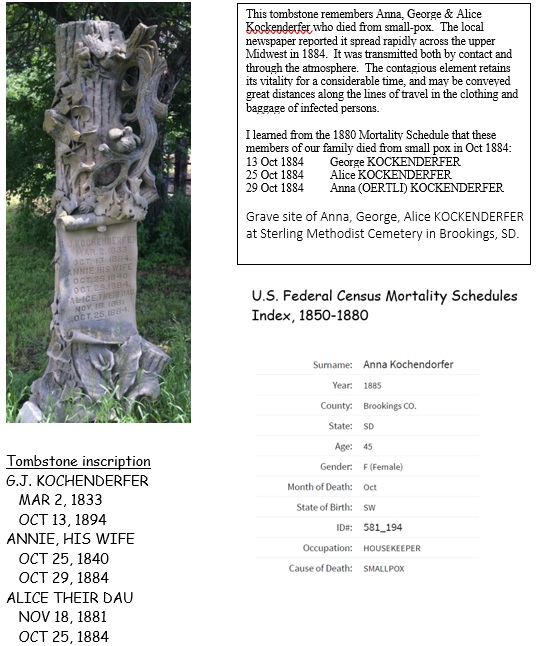
- US Federal Mortality Schedules Index (1850-1880) varies by state
- Church Records – As seen in this church newsletter obituary:
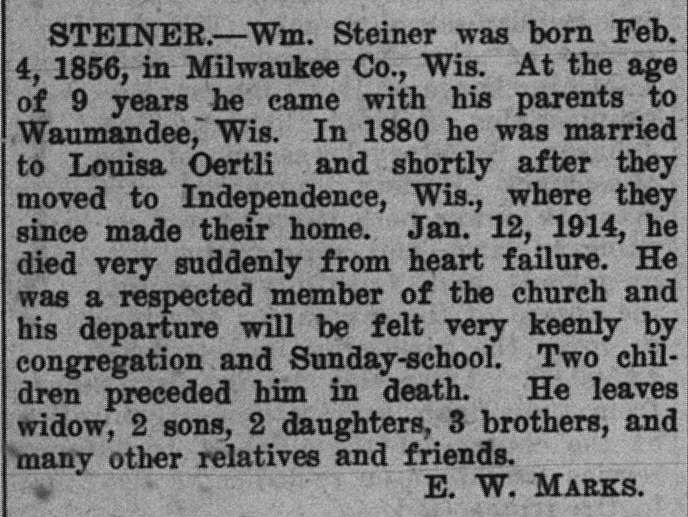
This example is William Steiner’s obituary stating he died suddenly from heart failure. Source: The Evangelical Messenger – Church paper for the Evangelical Association. Index is available online at https://www.genealogycenter.info/search_evanmessenger.php
- Death Indexes – many states now have death indexes online
- Employment records (Railroad) – may describe death and cause
- Death Certificate – most states began requiring death certificates around 1900.
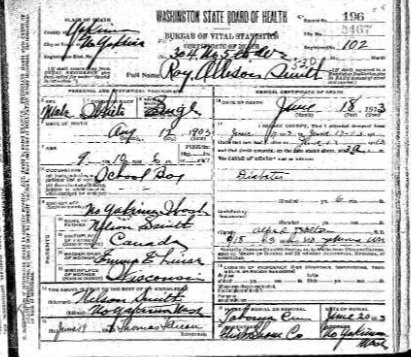
Example is a Washington State Death Certificate for ROY ALLISON SMITH
who died June 18, 1913 – Cause of death: DIABETES
Find At A Library
- County Histories – some histories give detailed accounts of a persons life.
- Family Histories – privately published family histories often share information about a persons death.
Cemetery/Funeral Home
- Guardianships – if a person died with young children there could be detailed guardianship papers filed with the county.
- Hospital Records – if a person died at a hospital, it would record the details, IF you could get copies.
- Mortuary Records – The business that handles the body after death will have detailed information including biographical and personal information.
- Cemetery Record – The cemetery where a person is buried will have records of who is paid.

Example: St. John’s Cemetery Book, Waterloo, Ontario, Canada.
States Valentin Schlegel died 30 Jun 1863 of complication of Asthma.
Online Newspapers
- Newspaper clippings – these can be full of useful information
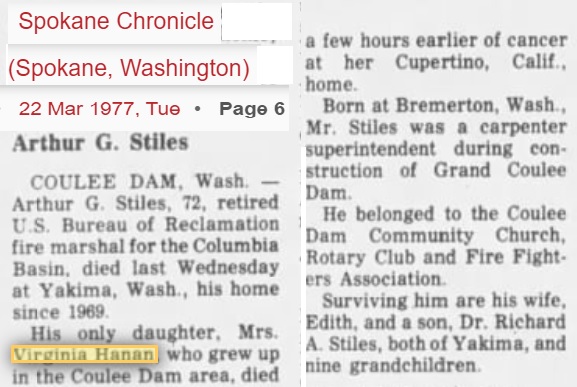
This example describes Arthur G. Stiles’ death on the same day as his daughter Virginia Hanan. Her cause of death: Cancer
- Obituaries – many obituaries in newspapers are available online or by writing to a library.
Less Common Records
- Coroner’s Record – a legal record of an autopsy report, they are available in some areas.
- Pension Records – pension records may describe information about their death, particularly if they died in service.
- Permit to Transport Deceased Persons – requirements vary but you can inquire with the funeral home and state regulations
- Real Estate Records – a home may be sold due to a person passing.
- Veterans Papers – pension records may describe information about their death, particularly if they died in service.
- Wills/Probates – probates filed with the county may reveal details.
- US Census Mortality Index (deaths within 12 months of a census) – these rare finds describe date, place and cause of death.
A family medical history can’t predict your future health. It only provides information about risk. Good luck as you ask your relatives, cousins and family historians. Let me know if you find something interesting in your family medical history. Or if you need help getting started.
There are some online tools to help you gather info, including this one from the Surgeon General and the CDC.
And remember you have a right to ask for your own medical records. You may need to pay for them, but think what a blessing that would be to future generations!
You might want to consider: Drug sensitivities, Chronic Conditions, Disabilities and Allergies.
PS/ Adoptees may want to contact the State Adoption Unit, Coordinating Agency, Hospital or their baby books – sometimes adoptive parents are told “non identifying facts which may include medical history.” You might also want to consider DNA genetic testing.
A fun website you may want to consider http://www.doesitruninthefamily.org/

 Geneographer